Concept piece for an invented game
WICKWATER, “The sea took the lights.”
A game is wishlisted for how it feels long before anyone can play it. This trailer sells the feeling: one lovable little lamplighter, a drowned city at dusk, and something vast under the boat.
Concept trailer for an invented game · painterly stylised 3D, cut to a score
30 s trailer with title card1920 × 1080 · 16:9Sound on · in-house score
01The value and the idea
Sell the feeling, then the game.
The brief we set ourselves: a trailer for a small game that makes people want to wishlist it, with the look of a painterly animated feature and none of the studio timeline. Most trailers lead with mechanics. A wishlist is a feeling, and this one is cosy wonder with a hint of danger.
The idea is a sea that took the lights. One small brass lamplighter robot rows through a drowned city at dusk and climbs a dark lighthouse. It relights the lens, the beacons wake one by one across the water, and then something vast glides under its little boat. The card reads WICKWATER. Wishlist now.
The sea took the lights.
Who buys this. Indie studios and solo developers with a game to announce. Publishers, funds and showcase teams that decide from a pitch trailer. Community and marketing leads who need an announce trailer, store-page art and key stills from one master.
What it proves. A trailer can sell the feeling of a game through one lovable hero and frames you could pause on, with every beat cut to a score. And a painterly 3D trailer can be made at a small studio’s budget and speed.
The system. One hero, one world, many beats. The trailer is the first beat of a campaign that renews with the game: a demo day, a release date, a seasonal update, each one a new beacon lit in the same drowned city.
The pair. Paired with NEON TIDE, an anime music-video snippet, and CANNONBALL, a stylised 3D drink ride: different looks, one method, the feeling first and the product as the payoff. See NEON TIDE, the music-video snippet and CANNONBALL, the drink launch.
Idea, direction, grade, sound, title card and edit by New Creative Design. WICKWATER is an invented game, not a title you can wishlist. Made with an AI-assisted production pipeline, finished by hand.
02Frames
The flame, the city, the lens.
Seven beats in 30 seconds, each cut to the score: the lit flame, the drowned city, the climb, the relit lens, the beacons, the shadow under the boat and the title.
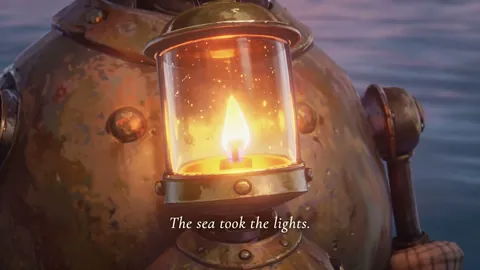
01The flame, 2.0 s 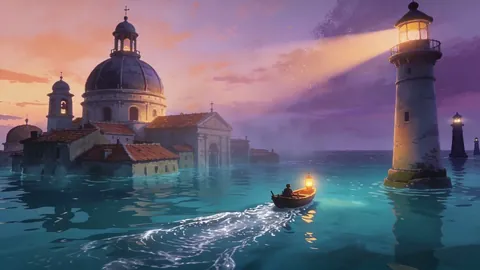
02The drowned city, 5.5 s 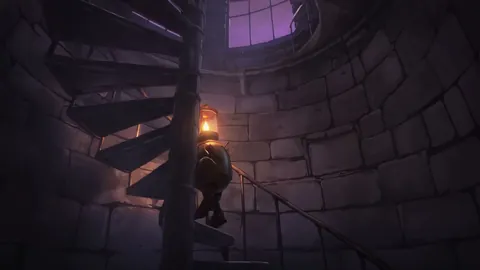
03The climb, 10.0 s 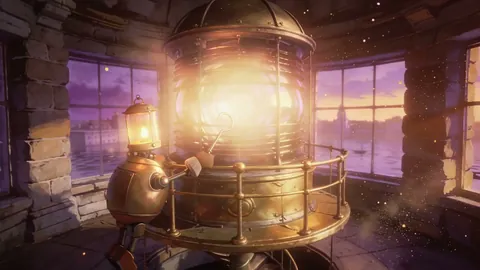
04The lens, 15.0 s 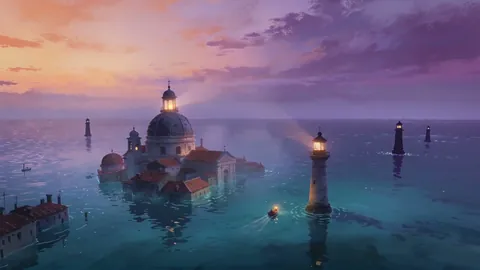
05The beacons, 21.5 s 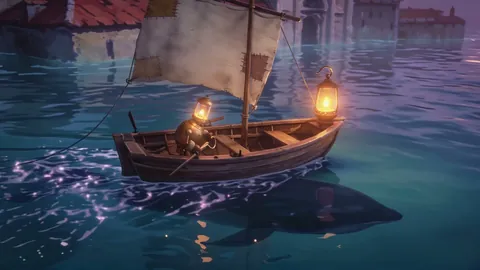
06The shadow, 25.5 s 
07The title card, 28.5 s One small flame, one drowned city.
03What this could do for your business
Sell the feeling, then the game.
Built for
- Indie studios and solo developers with a game to announce and a wishlist page to fill
- Publishers, funds and showcase teams that decide from one pitch trailer
- Community and marketing leads who need an announce trailer, store-page art and key stills from one master
The business case, in six lines
- 1The problem it solves
- A small game has to be wishlisted for its feeling long before it can be played, and most trailers open on a menu and a mechanic. It needs a reason to be remembered, in 30 seconds, on a store page and on a phone.
- 2What was delivered
- A 30 second 16:9 concept trailer, 1920 by 1080 at 30 fps, sound on: the lit flame, the drowned city at dusk, the climb, the relit lens, the beacons, the shadow under the boat and the wishlist title card, cut to an in-house score.
- 3What it costs, in shape
- Quoted in USD before we start.Industry benchmark, not a promise or a quote: a studio price guide puts a 30 second 2D game teaser at about $2,500 to $5,000 and a 3D cinematic reveal trailer at about $8,000 to $20,000 and up (studio price guide, 2025).
- 4Where it earns
- The store page and the wishlist drive, the announce post on social, a showcase or festival submission, the press kit, the publisher or funding pitch deck, and shorter cuts for ads from the same master.
- 5Proof of craft
- Frames you could pause on: the drowned city at dusk and the lens igniting read as key art. A hero you can love at a glance, a small brass robot with a lantern for a head. Every beat is cut to a score. The line and the title card are set by us, not generated.
- 6What to measure
- Wishlist adds and store-page visits from the trailer, completion rate, saves and shares of the announce post, and showcase or press pickups, per cut, in your own analytics.There are no results of ours for this study yet.
Three plays
The wishlist trailer
The 30 second trailer tops the store page and the announce post and ends on the wishlist card: the flame, the drowned city, the climb, the relit lens and the shadow.
OutcomeWishlisted for a feeling, not a feature list
The pitch trailer
The same trailer opens the publisher deck, the funding pitch and the showcase application, so the room sees the feeling of the game before there is a build to show.
OutcomeYour team says yes to something it can see
The lamplighter, everywhere
The hero and the key frames carry the campaign: the store art, the press kit, the devlog thumbnails and a new beacon for every beat, from demo day to release date.
OutcomeA face the community knows at a glance
Starts withA game trailer, in a painterly stylised 3D look: a 30 second trailer with its wishlist title card, cut to its score. Quoted in USD before we start.
WICKWATER is an invented game, not a title you can wishlist. This is a concept trailer, not a client project.
04Craft and handover
Storyboarded frame by frame, then made.
How it’s made. Storyboarded and art-directed frame by frame, generated with AI video models chosen per shot, then cut, graded, titled and sound-designed by our team.
Format
1920×1080 at 30 fps, 16:9, sound on, designed in-house: a score made for the trailer, with no third-party music.
Rules
- Reference-locked. You approve the look before we generate.
- The feeling first, the game as the payoff. The trailer ends on the title and the wishlist card.
- The type is ours. The on-screen line and the title card are set by us, not generated.
- AI disclosure in the post, never on the frame. The platform label is switched on at upload.
You get
- The trailer, 30 s, with your title card
- Key stills for the store page, the press kit and thumbnails
- Shorter cuts for social, from the same master
The caption we post
“The sea took the lights. One small lamplighter is bringing them back. 🕯️🌊 WICKWATER, a concept trailer for an invented game.” The post carries the AI disclosure in its caption and the platform label.